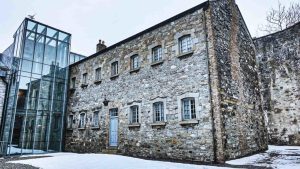
Kilmainham Gaol’s long and difficult history has naturally given rise to stories that fall outside official records. Visitors and staff members occasionally mention unusual sounds or fleeting impressions experienced during quieter hours of the day. These accounts do not attempt to present supernatural claims as fact, but they illustrate how deeply the atmosphere of the building influences people who spend time there. The gaol’s cold stone walls, narrow passageways and heavy doors create an environment where silence can feel immersive, and imagination tends to amplify subtle details. Even without considering ghost stories, it is easy to understand why the building leaves a lasting impression on those who walk through its corridors.
One of the most frequently mentioned areas is the East Wing, where the combination of height, acoustics and natural light creates an unsettling stillness after closing time. Staff have spoken of hearing faint footsteps or the distant clang of metal, sounds that could be explained by temperature changes or the settling of old materials. Yet the persistence of such reports has contributed to the building’s reputation as a place where the past occasionally feels unusually close. These accounts tend to surface during staff conversations rather than official tours, serving more as informal anecdotes than historical claims. They add a layer of curiosity to the site, reminding visitors that emotional responses to historic spaces can be as revealing as documented facts.
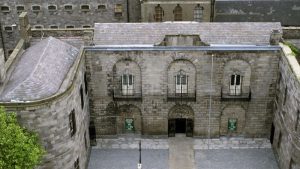
The courtyard, known for its major historical events, also features in late-night rumours. Some staff members describe an intuitive sense of heaviness when crossing the open space after sunset, even though the area appears unchanged from daytime visits. The stark simplicity of the courtyard allows imagination to fill in the silence, and those familiar with the site’s history often find that knowledge heightens their awareness of surroundings. While the museum does not promote ghost stories as part of its interpretation, these personal impressions contribute to the building’s mystique and reflect the emotional weight associated with spaces where significant events unfolded.
Perhaps the most compelling aspect of these rumours is what they reveal about human perception. Kilmainham Gaol is a site that encourages reflection, and its preserved condition allows visitors to feel close to the people who once lived, struggled and made history there. The atmosphere is powerful enough that even ordinary noises can take on meaning. While the museum maintains a firm focus on documented history, the stories told by staff and visitors serve as reminders that heritage sites influence people in many ways. These late-night impressions do not attempt to rewrite the past, but they demonstrate how a place can continue to evoke strong responses long after its original purpose has ended.